Rethinking Early Dementia Diagnosis: What Does It Mean to “Know Earlier and Do More”?

編集委員会(スタッフ)/Staff 01
02/09/2026

Rethinking Early Dementia Diagnosis: What Does It Mean to “Know Earlier and Do More”?
On August 31, DIXNet held its second online meetup. The themes for this session came directly from the discussion at our first meetup: “Dementia and Table Tennis” and “Early Diagnosis of Dementia.”
The first part of the meeting introduced examples from Japan and overseas showing how table tennis has been used in dementia prevention and non-pharmacological support. The main part of the session focused on early diagnosis and invited participants to reflect on what it really means to create a society in which “the earlier you know, the more you can do.”
Dementia and Table Tennis
We began with a short presentation on the possible benefits of table tennis for people with dementia.
Table tennis requires players to visually track a rapidly moving ball, make quick decisions, move their bodies, and respond immediately. It also offers enjoyment, motivation, and social interaction through rallies and friendly competition.
Examples from overseas were introduced in which table tennis programmes have been adapted so that people at different stages of dementia, including wheelchair users or those unable to hold a conventional racket, can still participate.
Toward the end of the meeting, participants also shared examples from China, where table tennis is deeply embedded in everyday culture, and from a Japanese gathering for people with young-onset dementia where a form of table tennis using a ball with a bell inside is enjoyed by participants.
These examples suggested that table tennis may be valuable not only as exercise, but also as a way to promote enjoyment, connection, and participation in community life.
Beginning with Lived Experience
The main discussion then turned to early diagnosis.
We began by introducing an interview with a participant from our first meetup, who had spoken publicly about his own journey toward diagnosis.
He had first noticed difficulty finding words during conversations and initially thought it might simply be a temporary problem. Later, when these difficulties began to affect important business situations, he sought medical advice.
His story highlighted a simple but important reality: even when early diagnosis is considered desirable, people do not necessarily seek medical help immediately after noticing changes.
The interview also described the challenges that followed diagnosis, including concerns about work, income, and the impact on family life. At the same time, receiving information from a community support centre about available financial and social support was experienced as a source of reassurance.
This led naturally to one of the central questions of the meeting:
Should early diagnosis and post-diagnostic support always be considered together?
“We Might Have Been Able to Do More”
Several participants then shared their own experiences of diagnosis, either personally or through supporting family members.
One participant reflected that, looking back, an earlier diagnosis might have created more opportunities to support a relative to continue living independently.
Another described a wife who herself noticed that something was wrong and asked to see a doctor. Her first consultation did not result in a diagnosis, but when her difficulties became more apparent a few years later, she was diagnosed. Afterward, the family gradually used a wide range of community and home-based services.
A researcher also shared findings from interviews with people living with dementia, noting that the journey from recognising symptoms to receiving a diagnosis, accepting the diagnosis, and deciding whether to tell others is far from straightforward. Existing knowledge about dementia, attitudes toward the condition, family concerns, work, and relationships within the community all influence that journey.
Diagnosis Is Not the End Point
One message was repeated throughout the discussion:
Early diagnosis alone is not enough.
Participants stressed that people need to know not only that diagnosis is possible, but also what kinds of support are available afterward.
Particular concern was expressed about people with young-onset dementia.
Participants described how people may still be physically active, capable of working, and eager to remain involved in society, yet appropriate employment support, places to belong, and community services are often limited.
One participant put the issue very powerfully:
“Early diagnosis must not become early despair.”
There was concern that once someone receives a diagnosis, those around them may immediately begin to restrict their independence — taking away their wallet, mobile phone, or other aspects of daily life — even when the person is still capable of using them.
Another participant suggested that immediately after diagnosis, people need to hear not only about long-term care services, but also a much more hopeful message:
“Please continue your life as you have been living it.”
The 2026 ADI Campaign
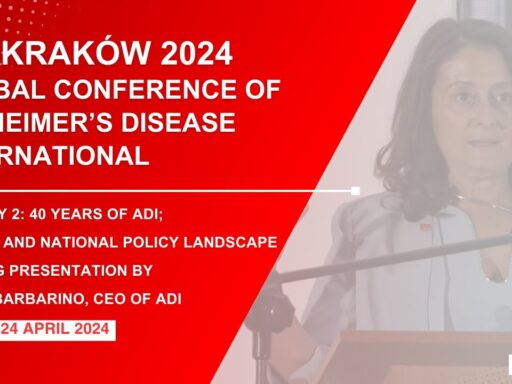
The discussion then turned to the 2026 World Alzheimer’s Month campaign of Alzheimer’s Disease International (ADI).
Its message is:
“The Earlier You Know, The More You Can Do: A Dementia Diagnosis Matters.”
Participants were introduced to the idea that timely diagnosis is not simply about attaching a medical label as early as possible.
Rather, it can allow people to access information, treatment, social resources, and support; to better understand what is happening; to maintain quality of life; to plan for the future; and to explain their situation to family, friends, and employers.
In other words, diagnosis should become a tool for living, rather than an end point in itself.
What Can We Do as Citizens?
The final question was therefore:
“What can each of us do to help create a society where knowing earlier really does mean being able to do more?”
Participants offered a wide range of ideas.
Some spoke about the need to create ordinary towns and neighbourhoods in which people with dementia can continue to shop, travel, work, and participate without being separated into special environments.
Others emphasised the importance of communicating more clearly about post-diagnostic support.
Several participants highlighted employment and financial security for people with young-onset dementia.
There was also discussion about the need to change the wider social image of dementia — from something to be feared and avoided, toward something that should be understood as part of life and considered personally relevant to everyone.
Perhaps the most important insight to emerge from the discussion was this:
A society that promotes early diagnosis and a society in which people can live well with dementia cannot be built separately.
If diagnosis is followed by meaningful work, social roles, supportive relationships, appropriate services, and opportunities to remain connected to the community, then the phrase “the earlier you know, the more you can do” can begin to become a lived reality.
DIXNet hopes to continue these conversations beyond the meetup itself, connecting the ideas shared by participants with future dialogue, exchange, and citizen-led action.
編集委員会(スタッフ)/Staff 01
See other articles from 編集委員会(スタッフ)/Staff 01→