〜Sharing my experience with others〜Tetsuya Shimoda

編集委員会(スタッフ)/Staff 01
17/08/2026
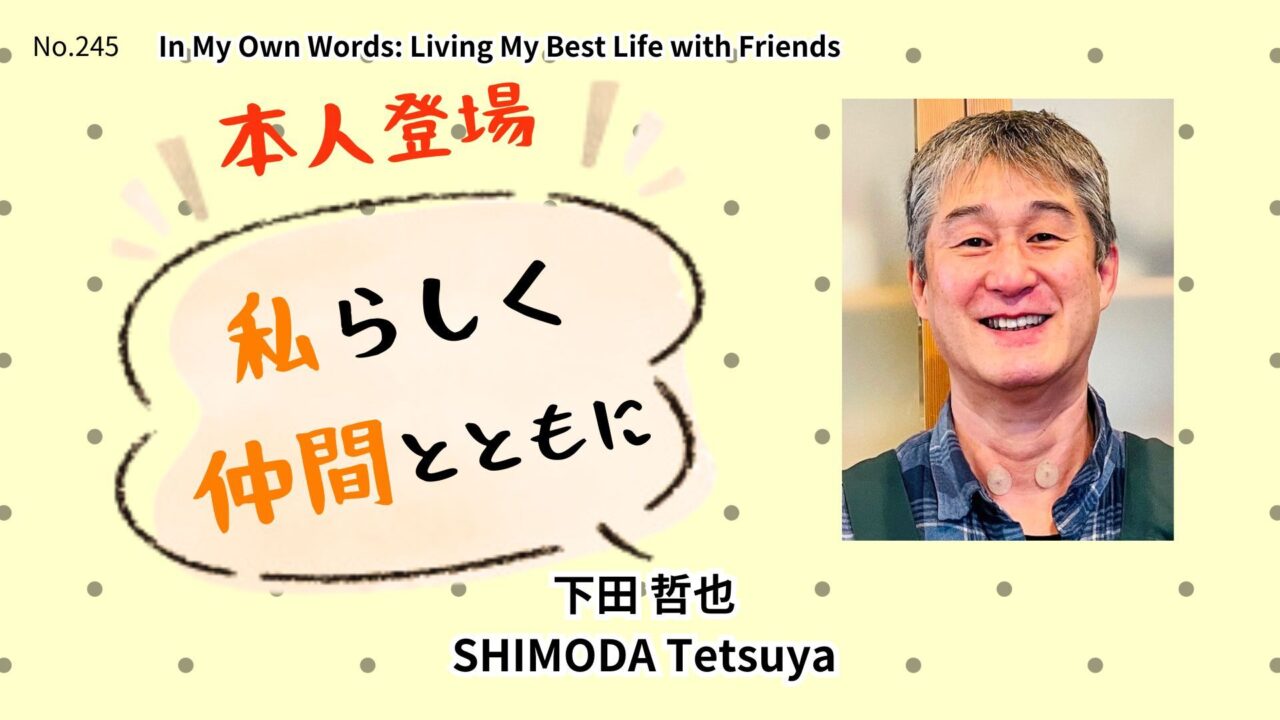
Diagnosed with MCI (Mild Cognitive Impairment) in February 2018
I was 53 years old. I had been living in Malaysia for 24 years when I was headhunted by a publicly listed company in Tokyo and appointed head of its Singapore branch. Some of the local staff began saying, “There’s something strange about our new boss.” After hearing their concerns, a senior executive at the company encouraged me to visit a local neurosurgery clinic. I underwent a memory test and was diagnosed with MCI. “What is MCI? My memory test score was low? I should drink plenty of water?” I had no symptoms that I was aware of and still believed that my mind was perfectly fine. Nevertheless, I lost my job.
Diagnosed with Alzheimer’s disease in May of the following year
After that, I joined a Japanese manufacturing company in Penang, Malaysia, as the person responsible for its local factory. While I was being trained and taking over responsibilities from my predecessor, I was advised to undergo further testing and consulted a neurosurgeon. An MRI scan revealed that my brain had atrophied, and I was diagnosed with Alzheimer’s disease. Looking at the MRI images, the doctor carefully explained the extent of the atrophy, pointing out the space between my skull and my brain.“So my brain really has become smaller. That explains why I’ve been having all these problems!” Suddenly, it all made sense to me. Surprisingly, I did not feel particularly shocked. I did wonder, “Why me?” But seeing those images also helped me come to terms with what was happening. “If this has happened to me, there’s nothing I can do to change that. So now I need to think about how I’m going to live from here on.” That was how the images made me feel.
Returning to my hometown of Oita — and now sharing my experience with others
When COVID-19 began spreading, I decided to return to my hometown in Oita Prefecture. The Oita branch of the Alzheimer’s Association Japan held local gatherings for family caregivers, and my mother began attending them. As she learned more about my condition and gained access to a variety of information about dementia, she gradually became calmer and more understanding in the way she interacted with me. I also joined the association and now look forward to receiving its newsletter every month. Through the Alzheimer’s Association Japan, I have learned a great deal about dementia. Thanks to my mother, my younger brother and his family, and others around me gaining a better understanding of the condition, I am now able to live a peaceful and settled life.
I currently attend a Type B Continuous Employment Support facility, where I interact with people of many different ages who are living with a wide range of challenges other than dementia. Seeing how everyone is doing their best in their own circumstances has helped me become even more at ease with my own life. In fiscal year 2022, I was appointed an Oita Prefecture Dementia Hope Ambassador. I now travel to communities throughout the prefecture to share my own experience and this message: “If dementia happens, it happens. But even if it does, you can still be okay.”
Written By Tetsuya Shimoda
Translated BY Satoshi Nakano
編集委員会(スタッフ)/Staff 01
See other articles from 編集委員会(スタッフ)/Staff 01→