The essay about my carer’s life “ Mom’s refrigerator “

The Japan Dementia International Exchange Platform is a place for people living with dementia and their caregivers to share experiences, feelings, and thoughts. We are looking forward to your post. Please join us.
Here is Mr. Fukui’s essay. He moved to his mother’s house in a southern prefecture from northern Japan to care for her, leaving his beloved wife and cats.
To Mom’s House—and Inside
My day begins with clockwork regularity. I wake up at 4:35 a.m., quickly get ready, and leave the small apartment where I live alone. On winter mornings like this, deep in December, it is still completely dark outside. Three minutes later, riding my trusty pedal-powered vehicle, I arrive at Mom’s house.
Using the detachable light from the center of my handlebars, I take the morning newspaper from the mailbox and unlock the front door.
But first—caution.
There is always some kind of trap waiting just inside the entrance.
Today it’s a shoehorn.
If I walk in without noticing, I’ll trip over it. The object serves as Mom’s personal reminder that she locked the door. A shoehorn is the most common choice. Other variations include a cane, a broom, a ladle, or even a pinecone.
Ingredients Thawing in the Kitchen Sink
The first thing I do every morning is prepare breakfast.
Before anything else, I check whether the kitchen sink is in a state of peace.
As I mentioned before, I once had the “salty” experience of discovering that every frozen salmon fillet in the freezer had been thawed at the same time. For four days straight, every meal featured grilled salmon.
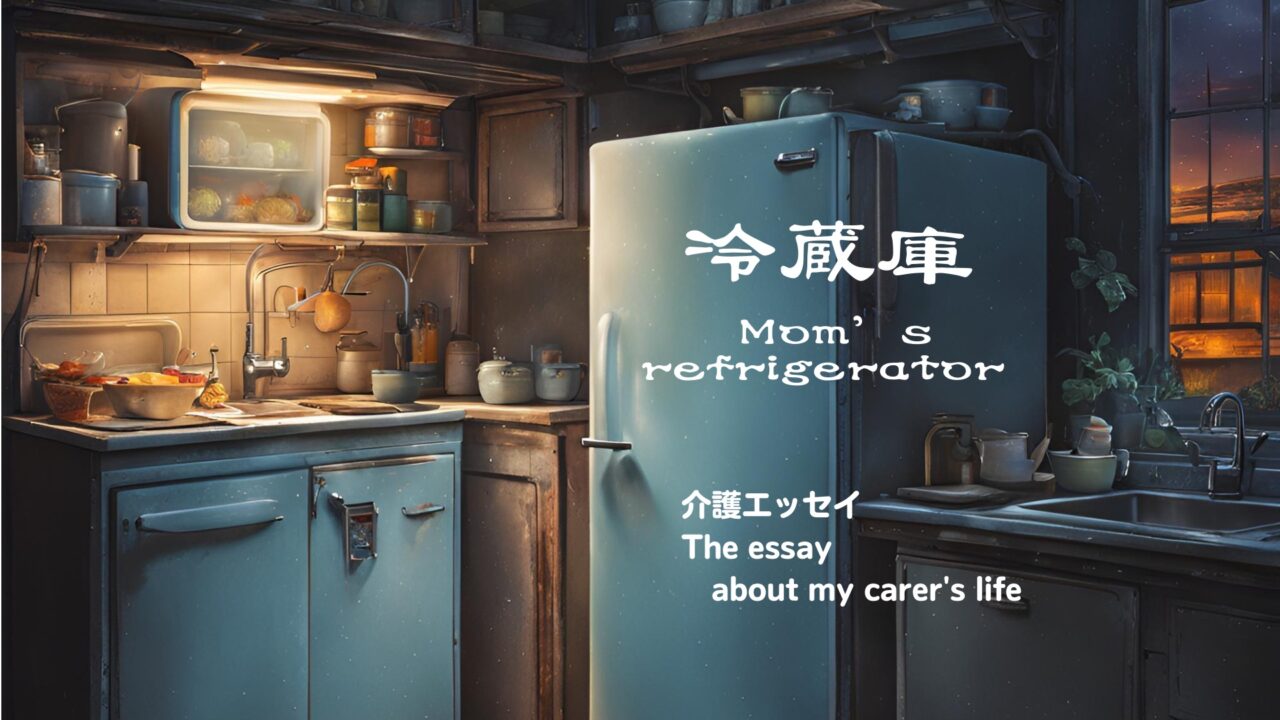
A handwritten note is taped to the front of the large refrigerator—with its two separate freezer compartments—reading:
“Please don’t thaw frozen food.”
But the sign serves little purpose beyond comforting me.
So when I find only a single egg and one package of thawed cured mackerel lying in the sink, as I do this morning, I breathe a sigh of relief. A last-minute menu change is still manageable.
Opening the refrigerator reveals another daily certainty: everything has moved.
The jar of mayonnaise that was on the rack yesterday has been tucked away in the back. A block of tofu has migrated from the middle shelf to the bottom one.
The freezer is no better.
Because Mom often leaves the door open while rearranging things, meat and fish packages are coated with frost. Through the plastic wrap they appear completely white, making it nearly impossible to tell what’s inside.
Yet it’s not as if she leaves everything out.
Apples, grapes, and other favorite fruits are properly taken out and eaten. Even frozen sweet rice cakes and soy-glazed dumplings seem to disappear while I’m away—probably consumed while still frozen.
So why is it only the ingredients meant for cooking that end up in the sink?
“Something Good to Eat” Inside Mom’s Mind
Mom has always been the type to study everything with enthusiasm, and cooking was no exception.
The meals she made when I was growing up in Osaka were not only delicious; they always seemed to contain an extra touch of ingenuity.
She also specialized in preparing many different dishes in small portions—perfect accompaniments for sake. That was her way of caring for my father, a devoted food lover who never skipped his evening drink.
As a child, I preferred vinegared mackerel and hot tofu over curry rice or hamburgers.
Only recently, my sister told me something I never knew: during those Osaka years, Mom actually attended cooking school whenever she could make time.
Many of the cooking tools still in her house are relics from that era. Though old, they are professional-grade: a heavy Chinese wok, a large mortar and pestle, razor-sharp slicers, and a bamboo rolling mat used for making datemaki.
Perhaps they are souvenirs from those days.
Even now, Mom spends hours at her seat in the dining room, gazing at old handwritten recipe notebooks and recipe-card collections that once came as magazine supplements.
She studies them endlessly, her expression suggesting she is turning over ideas in her mind.
Perhaps, in her imagination, she is once again skillfully wielding those familiar tools, preparing several dishes while trying to come up with what my father used to call “something good to eat.”
In Mom’s mind, those dishes are steaming.
They fill the room with irresistible aromas.
Judging from the ingredients removed from the refrigerator this morning, perhaps last night’s imaginary menu began with a rolled datemaki filled with shrimp paste, shaped using that old bamboo mat.
And perhaps the second dish was a beautiful, gleaming mackerel fillet, its pin bones painstakingly removed with tweezers, lightly cured with kelp and vinegar into perfect kizushi.
Thank You for the Meal
But reality brings me back to this morning’s breakfast table.
As I begin clearing away the clutter, I glance toward Mom’s usual seat and notice several old recipe cards scattered across the table.
Among them is a handwritten note:
Simmered dish ratio:
Dashi 8
Mirin 1
Shoyu 1
And beneath it, she has added a haiku:
At year’s end,
A modest meal made by an old mother
—Tomiko
An old mother?
Wait a minute.
Was she making something for me?
Or maybe for my sister?
Well…
Thank you for the meal, Mom.
It was truly delicious.
Translated by Yuko MAKINO (staff)
編集委員会(スタッフ)/Staff 01
See other articles from 編集委員会(スタッフ)/Staff 01→